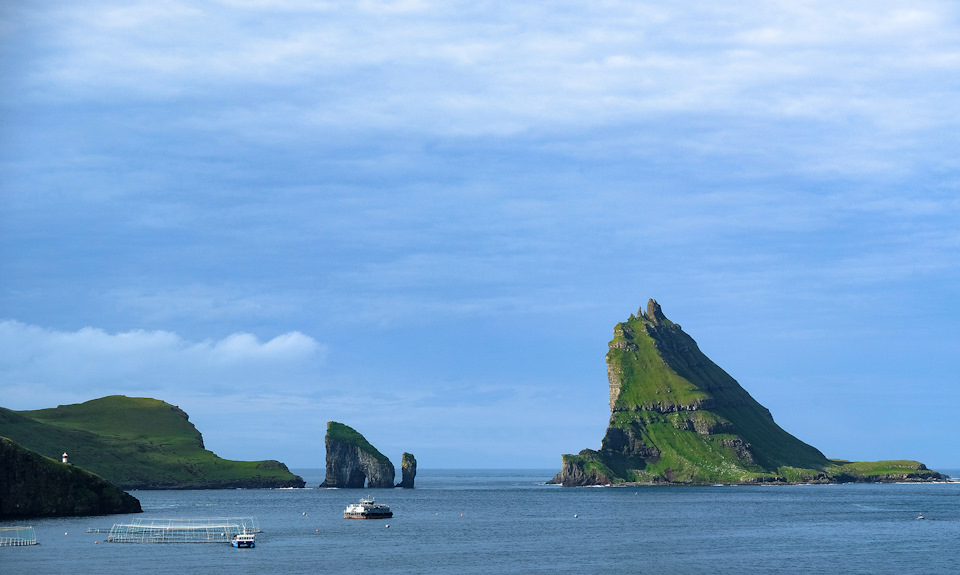
So, what do we know about this amazing place? The Faroe Islands, which means “Sheep Islands” in Faroese. – is a tiny archipelago of islands located in the Atlantic between Iceland and Scotland. There are approximately 70,000 sheep for a population of 48,000. Since 1948, the Faroe Islands have been part of the Kingdom of Denmark, but are almost completely autonomous.
I booked the car with Sixt in advance. It is possible without prepayment. Initially booked Peugeot 3008, but in fact they gave me a Qashqai.
There is no sense to book a lot of accommodation, as the islands are small and you can get from one end of the islands to the other in just a couple of hours.
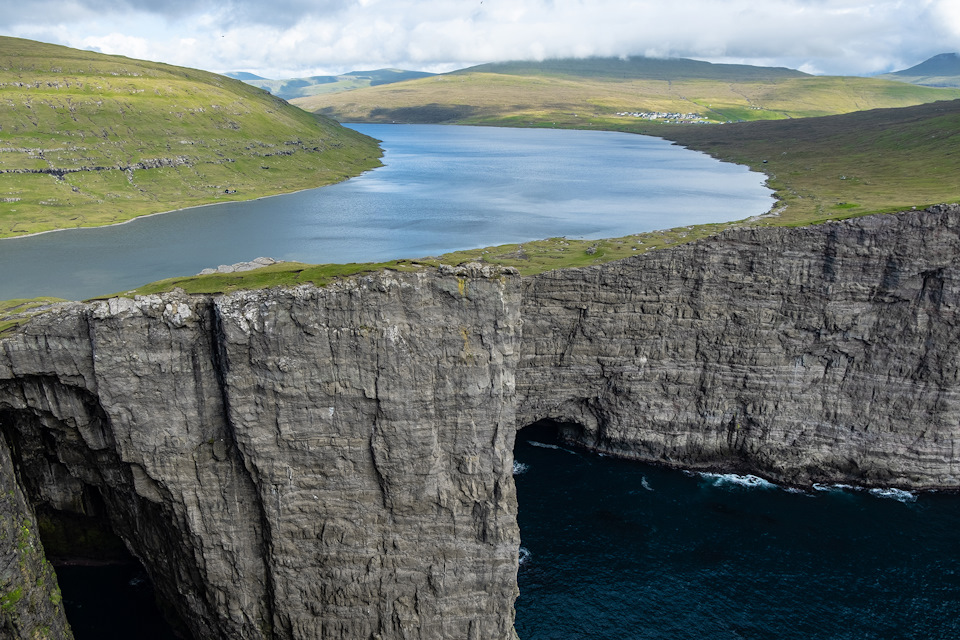
Our acquaintance with the Faroe Islands began with gorgeous and sunny weather. To be honest I could not even believe it, as there are about 300 rainy days a year and also the beginning of September outside. Joyful we set off on our first trek to the floating lake above the ocean called Sørvágsvatn. This is the largest lake on the islands. Entrance to the track is paid and costs 20 euros per person. At the entrance there is a small house with tables where you can have tea and coffee (included in the price).
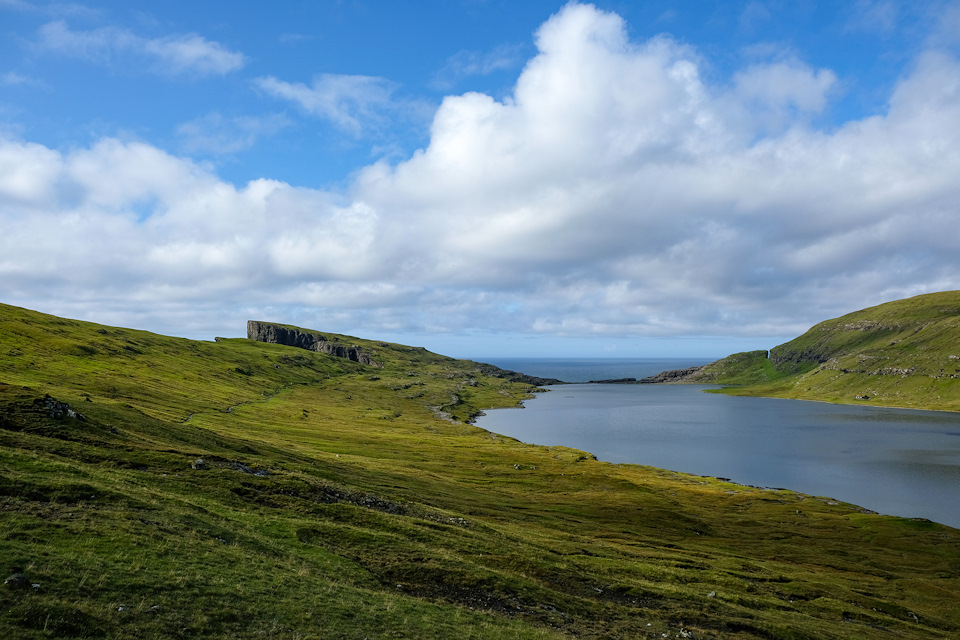
Yes, toll tracks are the biggest problem in the Faroe Islands. Unfortunately, almost all of the trails go through private property of farmers and the guys figured, since tourists walk and trample our grass, why not charge them? It sounds a bit wild at first, but imagine for a second that a hiking trail would pass through your countryside? Obviously, the scale is not the same, but still. So you can understand them too. There’s a special path on the track made by removing the soil. In places where the ground slips, it is reinforced. Where there are slippery and steep climbs, wooden steps are made. So it’s clear where the money is going. After 40 minutes of leisurely walking, we see the following picture:
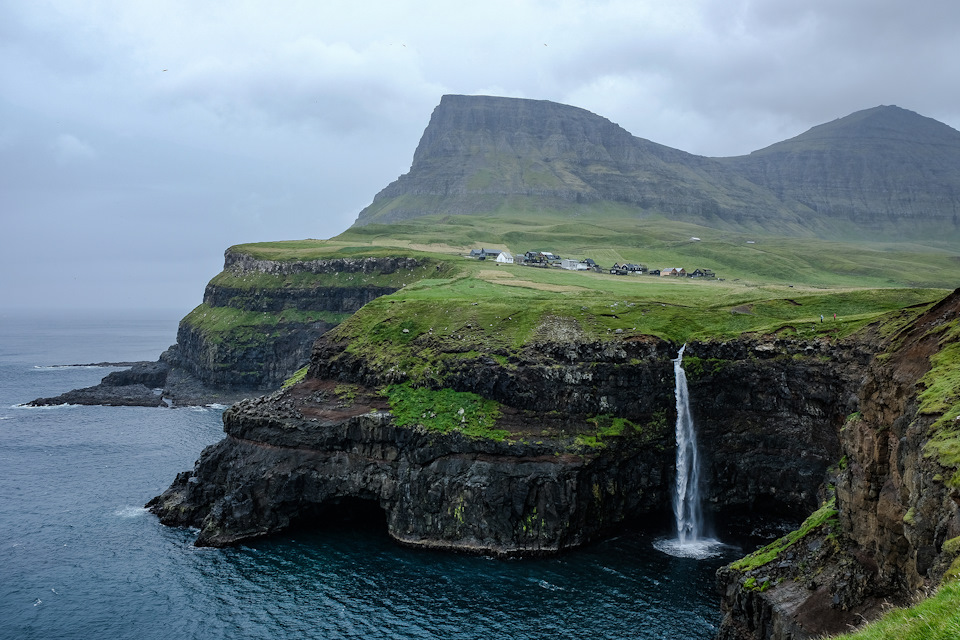
The next place is a village called Gásadalur.
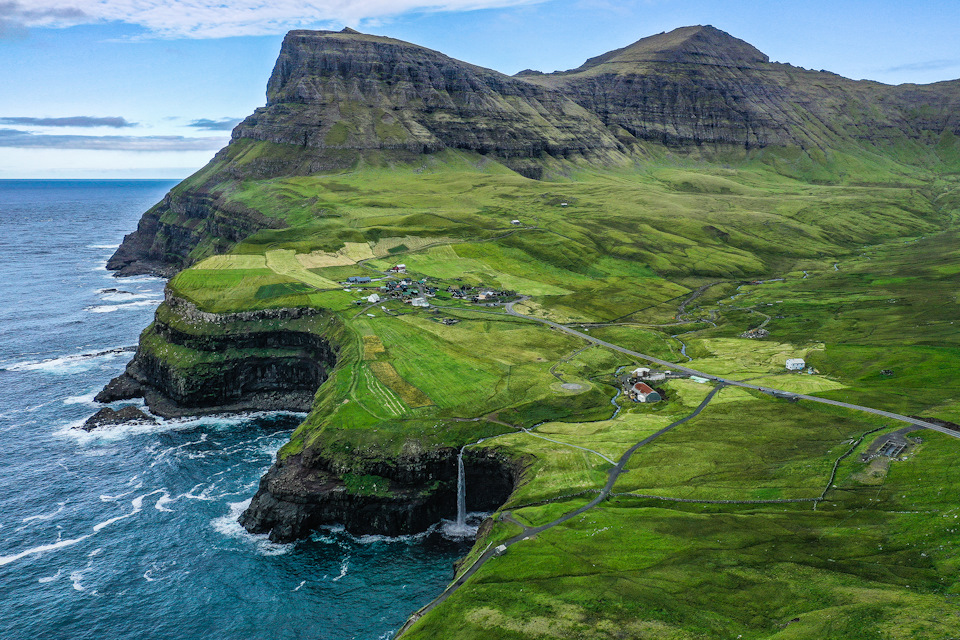
Now its population is just under 20 people. The problem is that the village is separated from neighbouring towns and villages by relatively high mountains, plus the coastline is very steep and high and until 2004 the locals had to cross the 500 metre high mountain by themselves on foot. Because of this, the population of the village thinned out and it was only in 2004 that a luxury one-lane tunnel was cut through the rock. The village is now a trademark of the Faroe Islands.
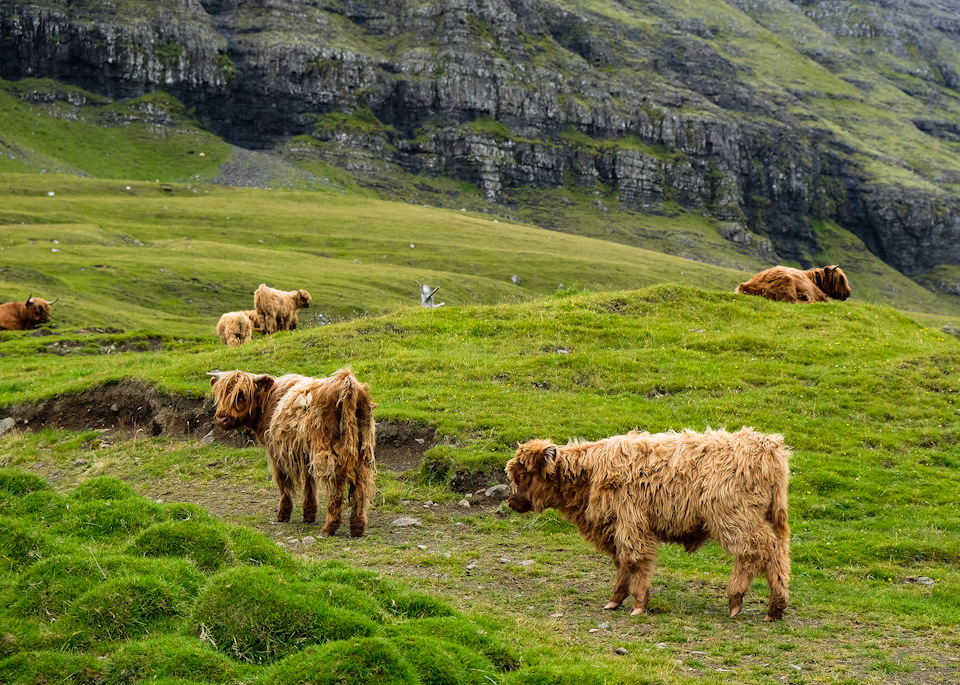
The village is grazed by these unusual highland cows:
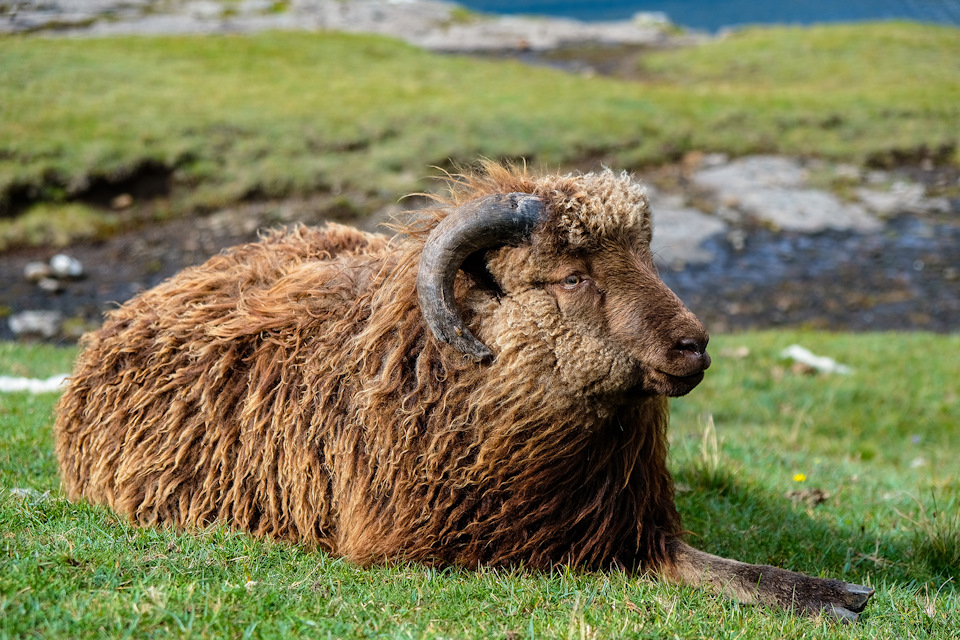
And from all sides you are watched by lambs, who outnumber people on the island and because of this they feel very confident:
Next we travelled to the island of Mykines, which is home to a colony of cute deadbeats that can be seen at arm’s length. You need to book and pay for the ferry in advance. We booked for 30 August. The cost is 11 euros per person + tax fee of 10 euros per person for visiting the island. Total turns out to be 21 euros per person. But alas the ferry was cancelled because of bad weather (the wind on this day was 18 m/c and pouring rain) and as it turned out ferry communication with the island ends on September 1 (the island for the winter is closed to tourists, and the colony of deadbeats begins to leave it). So here we found ourselves in a complete failure. By the way, the money for this ferry is still not returned to me, although they promised a full refund in case of cancellation. But that’s okay, we had enough of dead ends in Iceland. Due to the cancellation of the ferry the whole route plan had to be replayed on the fly and we went to a small village called Saksun.
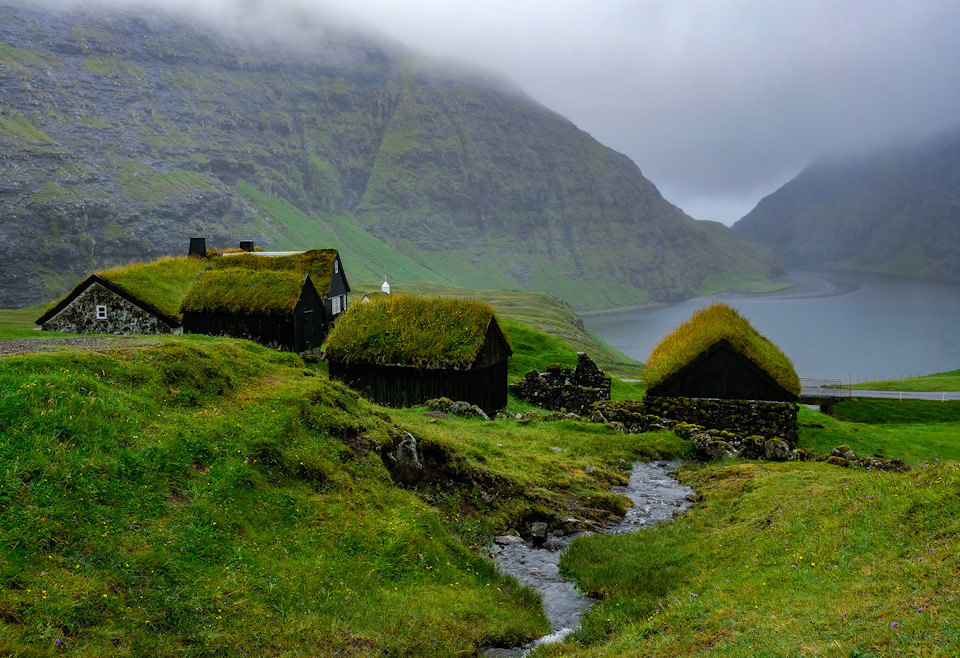
The village is set in a cosy harbour between fjords, and the main attraction is the grass-roofed houses. It rained constantly, only occasionally stopping for a couple of minutes, but we didn’t care, we walked around, enjoyed the views and just got high wrapped up in our mackintoshes. One of the lodges had a café set up in a homely atmosphere, where we had hot coffee and homemade waffles.
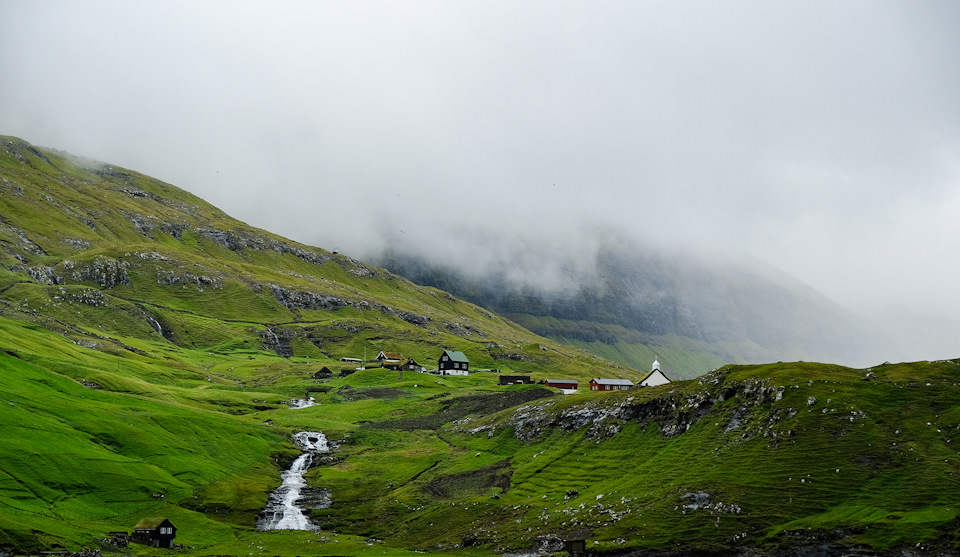
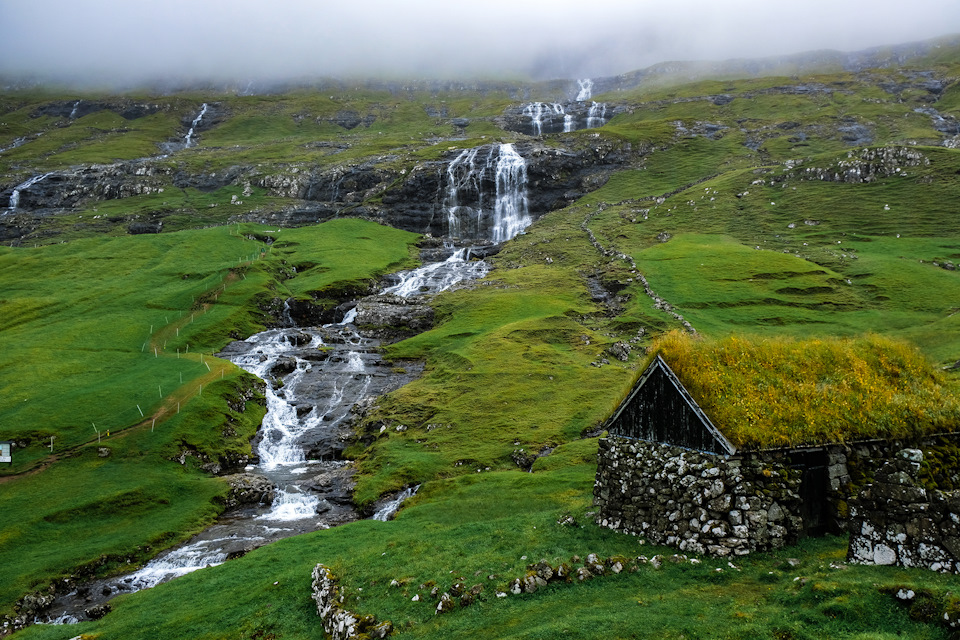
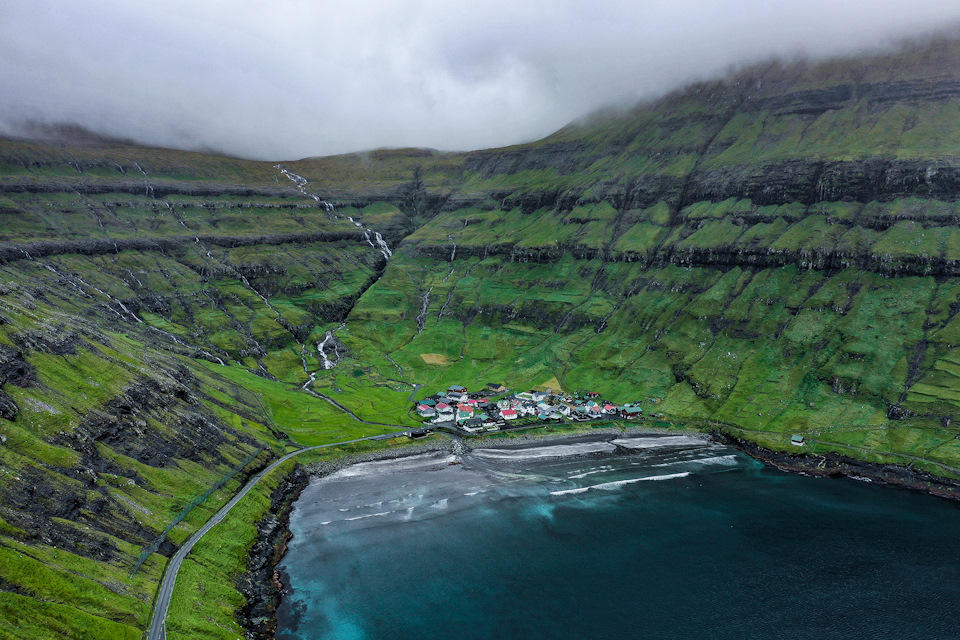
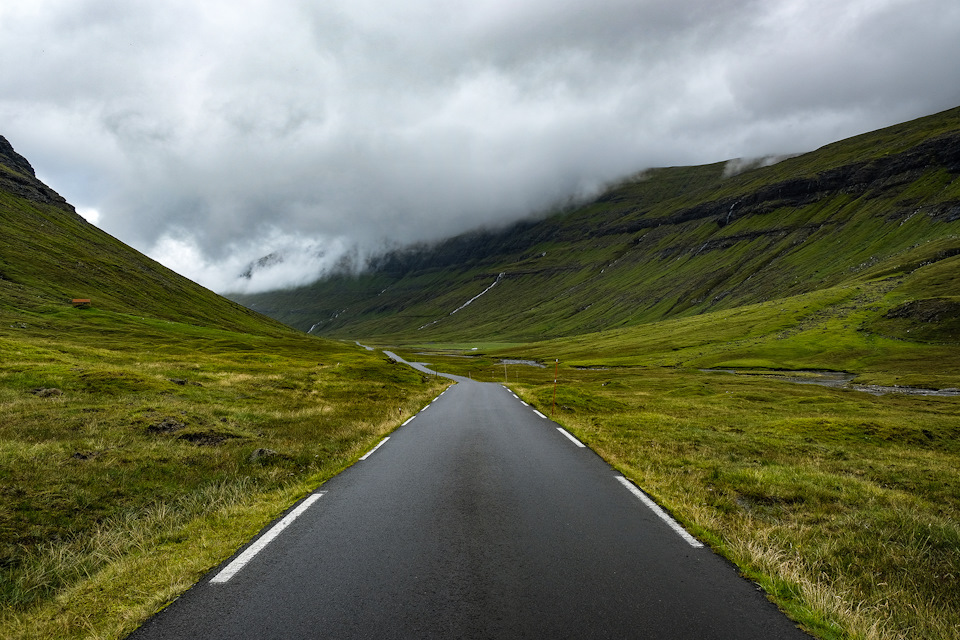
Somewhere in the middle of the road I decided to stop and make a photo of the islands from afar, I flew away on a copter for 2.5 km. To be honest, it was a bit scary, but the little guy coped with his task without any surprises.
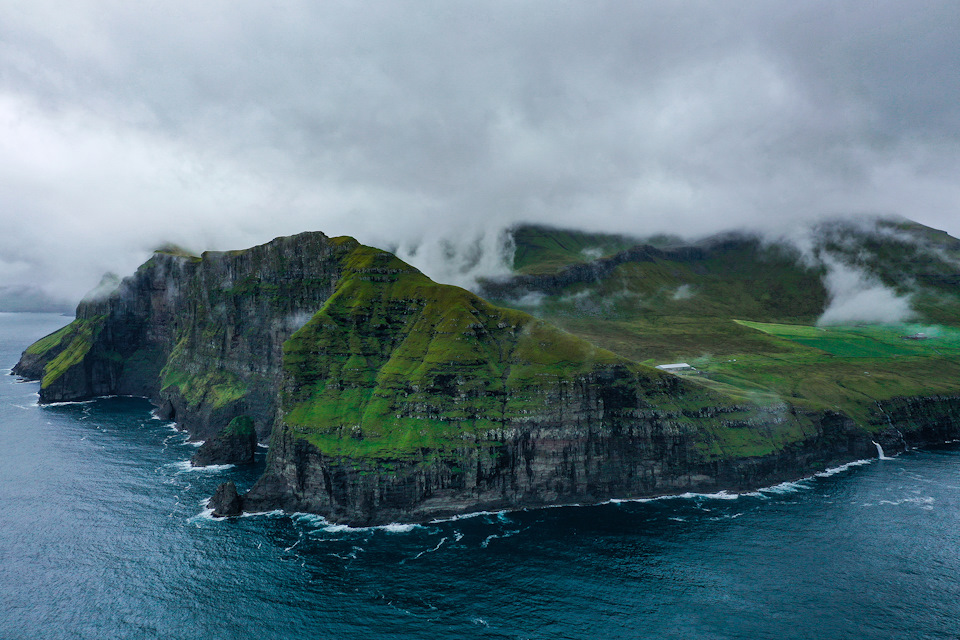
In general, you can admire the villages in the Faroes endlessly, they are all very different and unlike each other. Take for example the village called Gjógv (Gjógv). It has its own harbour for launching ships. And it looks incredibly beautiful from the outside.
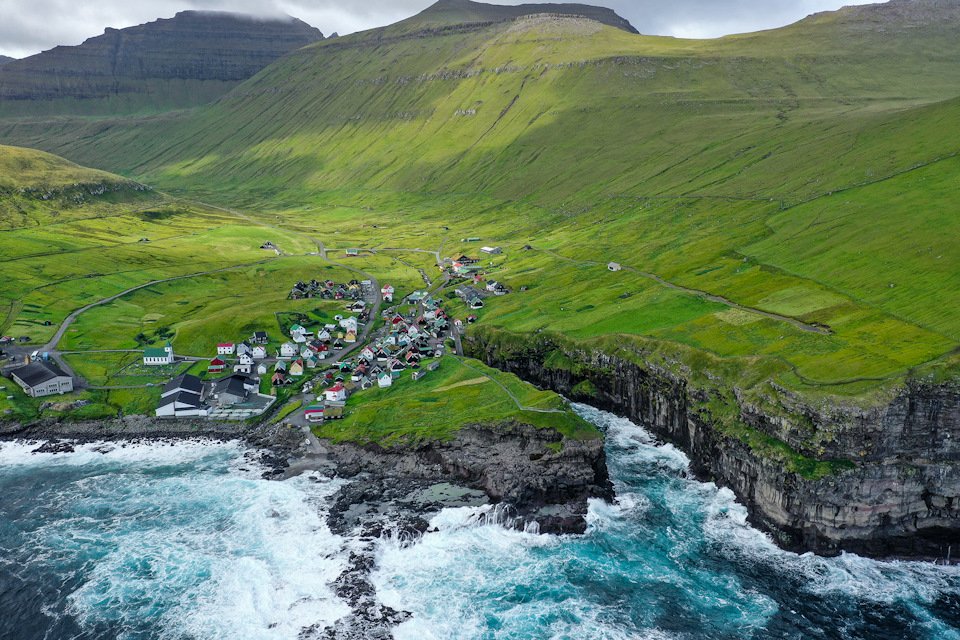
There are plenty of hiking trails around, you can climb the neighbouring mountain and take in the views.
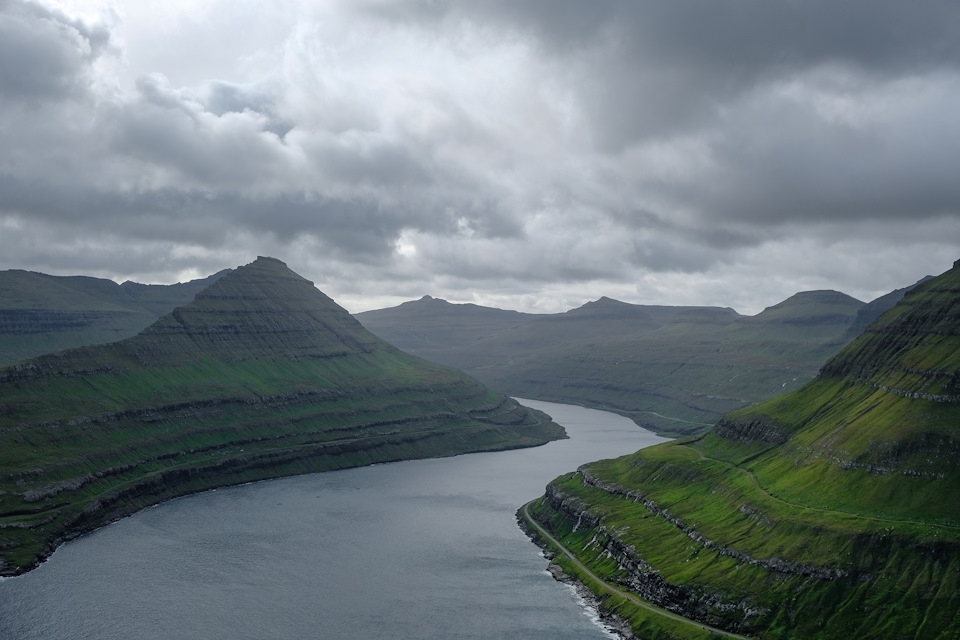
To this village we had to return the next day. On the first day of our arrival, the wind was knocking us down and it was raining endlessly. Looking at this photo, you can’t even believe that the wind is blowing ice-cold and the sun is not warming you at all )
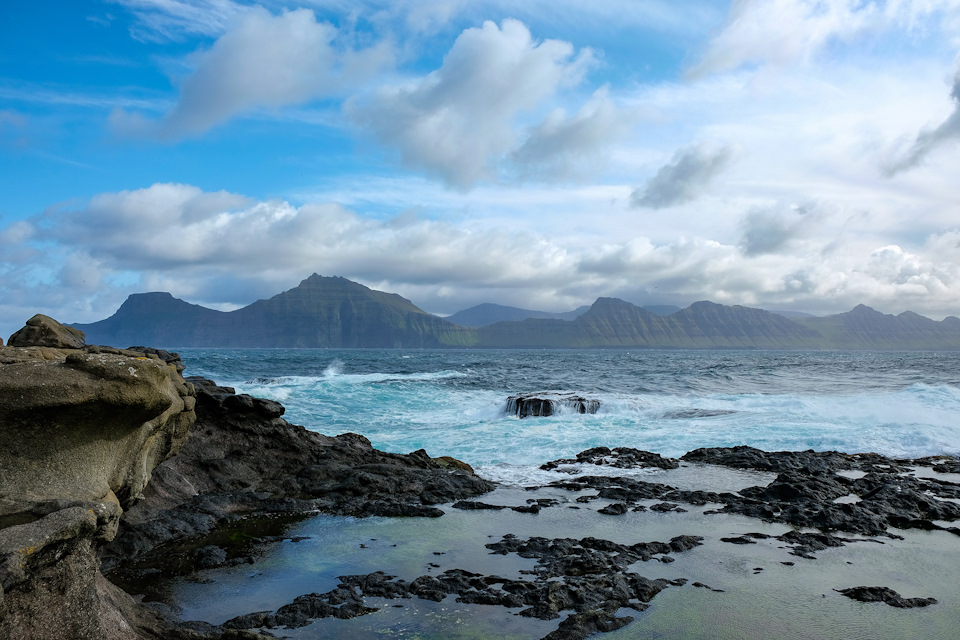
It was time to move on, because we were waiting for a shuttle bus to get to the capital city of Torshavn. By the way, the city is named in honour of the god of thunder. It’s probably where Thor from the Avengers was going to spend his old age.)
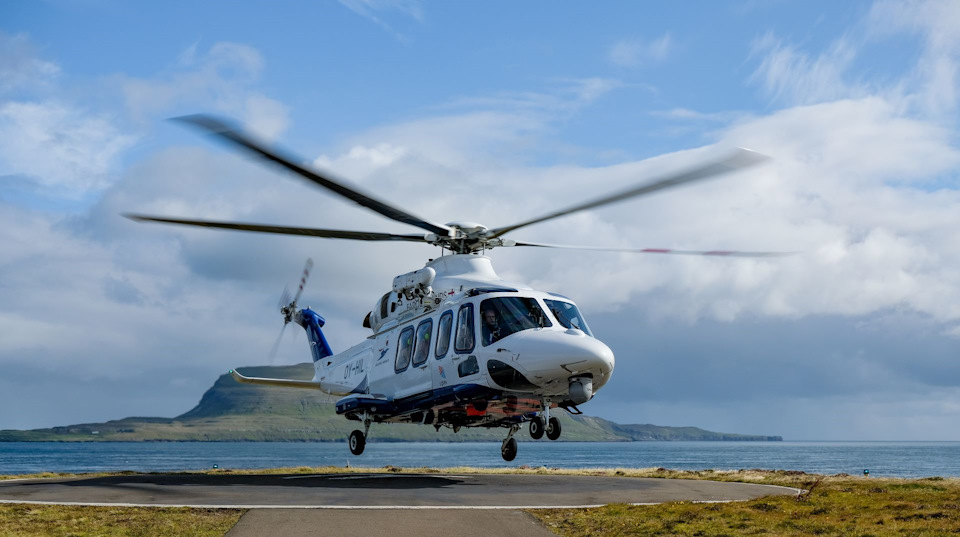
For the Faroese, a helicopter is just a form of public transport. For us – the inhabitants of the urban jungle – it sounds a bit wild and unfamiliar. Such a helicopter carries 12 people at a time. But there’s one big problem: round trip by helicopter is forbidden for obvious reasons. That is, you can fly only one way, and back, for example, by ferry or bus. And perhaps the most interesting thing is the cost. The price is about the same as a taxi in Moscow to the airport. We flew from Klaksvik to the capital Torshavn in exactly 12 minutes. But on the way back we had to take a bus and it took us an hour and a half. And that’s taking into account the fact that the bus made almost no intermediate stops. In Faroese the helicopter will be: Tyrla
Torshavn is quite a European town:
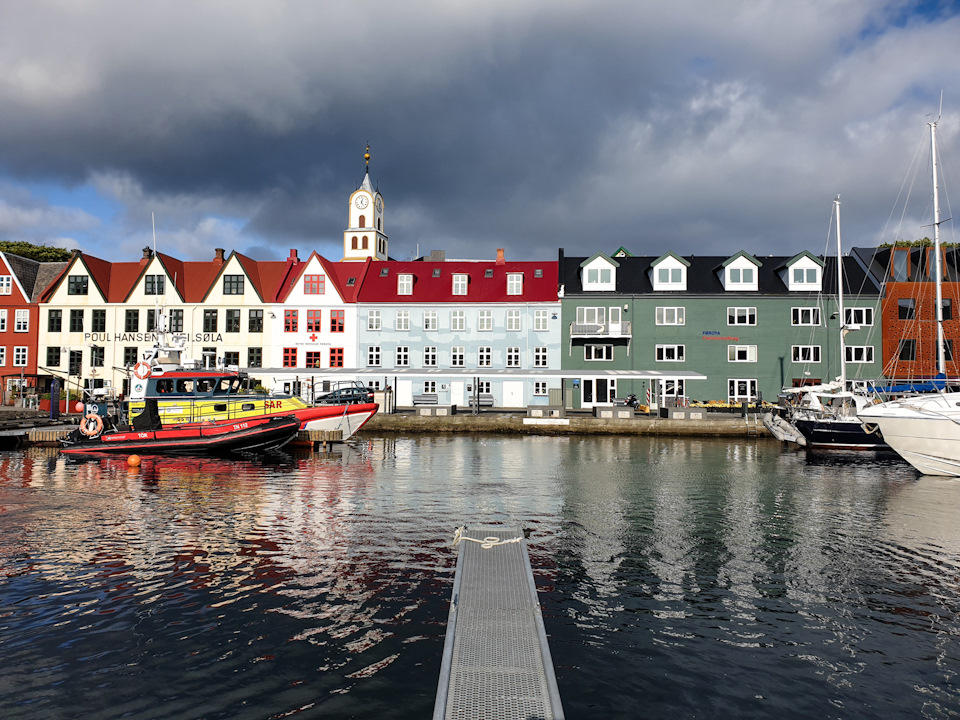
After walking around the city we got on the bus and shook in it for an hour and a half until we reached the helipad where we left the car. We had to go to Kalsoy Island.
The main attraction of the island is the lighthouse – Kallur Lighthouse.
To get to the island you need to take a ferry. Ferries run on a schedule, two in the morning and two in the evening and one late ferry which comes only by calling the ferryman in advance. The ferry only holds 16 cars.
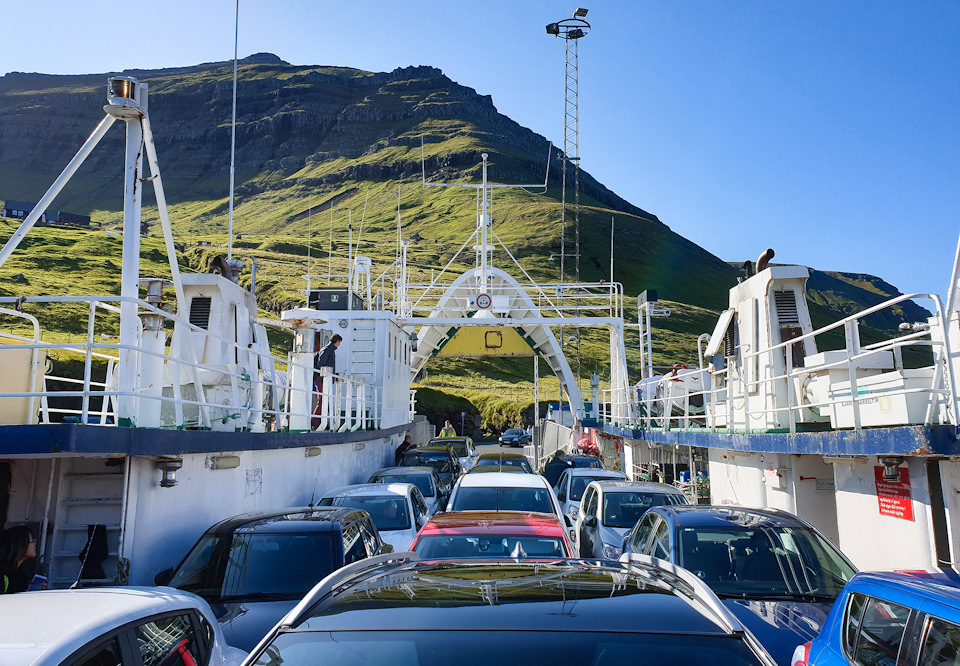
Locals are prioritised for boarding first, and the remaining seats are allocated to rental cars. We chose the 8am ferry and it was a good choice. We arrived an hour in advance and were the second in line to board. It didn’t take long at all, about 20 minutes. There is only one motorway on the island, which passes through a series of one-way tunnels cut into the rocks. The trek to the lighthouse is not difficult at all, it is a fairly gentle climb upwards and takes about an hour with small stops for a breather and admiring the views around. This place is one of the most beautiful in the Faroe Islands, the views make your heart sink and time seems to stop…for such views it is worth living….
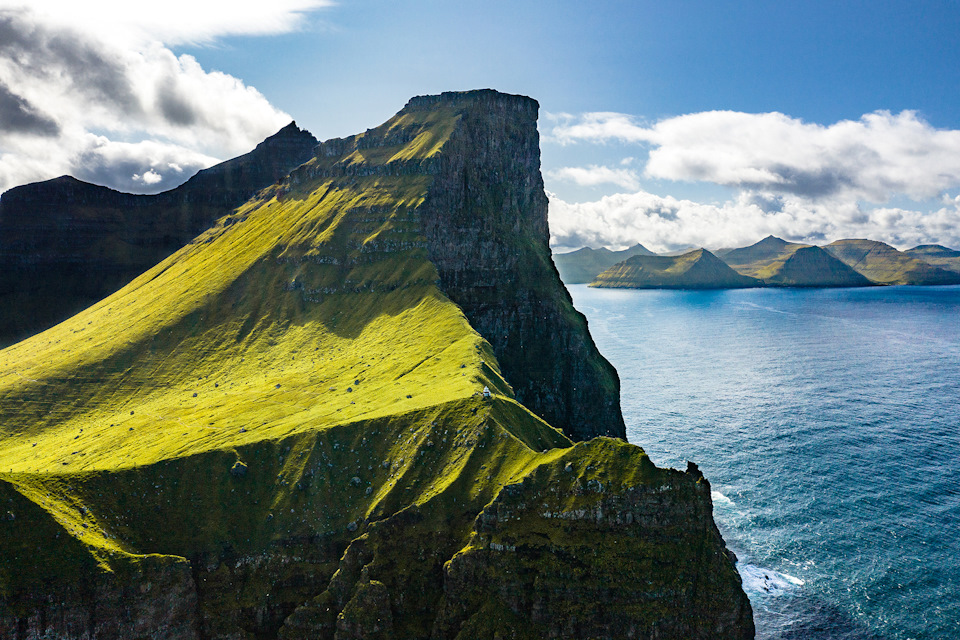
The white dot is a lighthouse. On the bottom left you can see silhouettes of people bravely walking along the ridge.
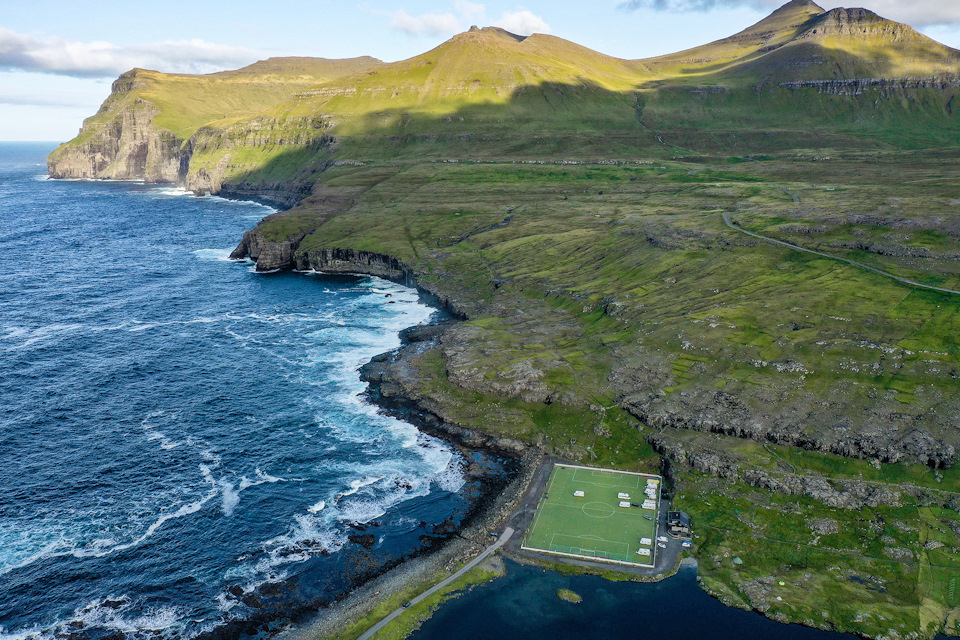
On the way back we decided to stop by the largest village on Kalsoy Island called Mikladalur.
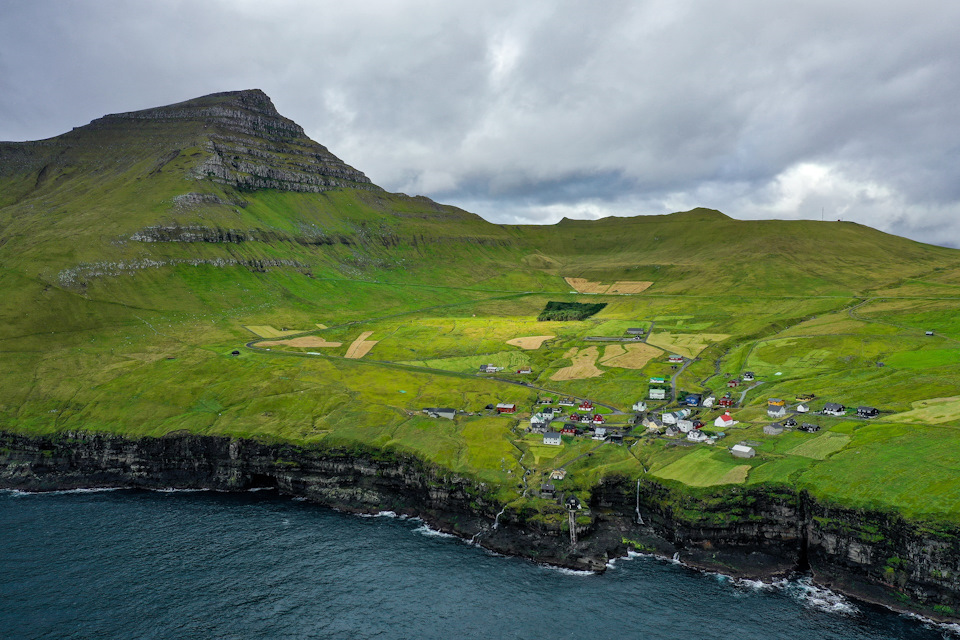
Well all the most useful and necessary links for those who are going to go:
1. Booking a ferry to Mykines Island: mykines.fo/#/home
2. Ferry and bus timetable : www.ssl.fo/en/home/
3. Helicopter booking: tyrla.atlantic.fo/
4. Winter/summer helicopter schedules : www.atlanticairways.com/en/helicopter/timetable
5. See the weather here: www.yr.no/
And anticipating questions about the financial component, I will write at once:
- Accommodation: 340 + 570 + 570 = 910 euros
- Car hire for 8 days: 670 euros (unlimited tunnel pass included) + 200 euros deposit.
- Fuel: 100 euros
- Air Tickets 500 euros
- Food: 350 euros
- Treks, ferries, helicopter: 104 euros
Thank you all.