Tourists who want to relax on a beautiful beach among charming bays often choose Montenegro as a travel destination. Montenegro also has picturesque mountain ranges and historic cities. We will tell you how to prepare for a road trip to Montenegro.
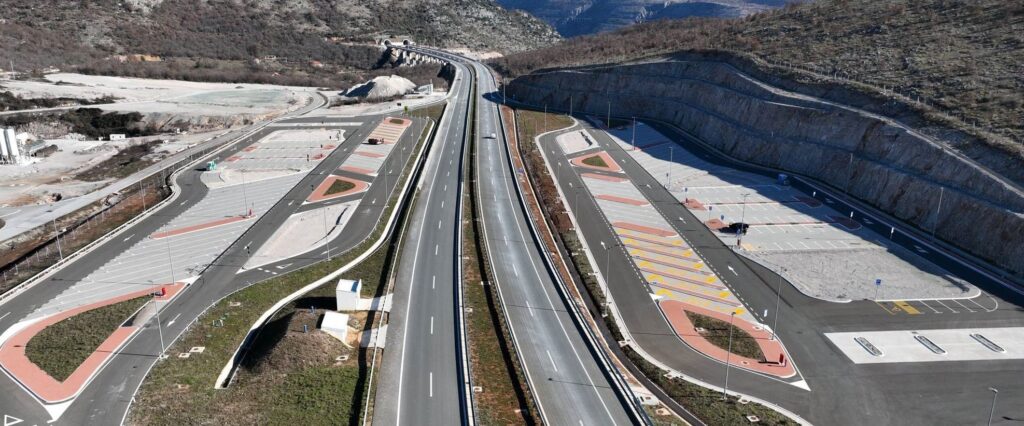
Toll roads and highways in Montenegro
There is one Bar-Boljare toll road in Montenegro (Smokovca-Mateševa section with a length of 41.5 km)
| Motor vehicles | 1.5 euro |
| Vehicles with two axles and a height equal to or less than 1.3 m measured on the first axle. Two-axle vehicles, the total height of which is equal to or less than 1.9 m, the maximum permissible mass of which does not exceed 3500 kg | 3.5 euro |
| Vehicles with three or more axles, the height of which is equal to or less than 1.3 m, measured on the first axle. Vehicles with three or more axles, the height of which is equal to or less than 1.9 m, the maximum permissible mass of which does not Two-axle mechanical vehicles, the height of which exceeds 1.9 m, the maximum permissible mass of which does not exceed 3,500 kg.exceeds 3,500 kg. | 6 euro |
| Vehicles with two or three axles, the height of which exceeds 1.30 m, measured on the first axle, and the maximum permissible mass of which exceeds 3500 kg. Two-axle mechanical vehicles, the height of which exceeds 1.90 m, the maximum permissible weight of which does not exceed 3500 kg with a trailer. | 10.5 euro |
| Vehicles with four or more axles, the height of which exceeds 1.3 m from the first axle, the permissible mass of which exceeds 3500 kg. | 17 euro |
The roads are narrow due to the mountainous terrain, which occupies 70% of the country’s territory. Routes between major cities are well marked and in good condition. Unfortunately, the roads leading to smaller towns are not in good condition. Until 2011, there was an environmental fee for entering the country, but it was canceled. Also, the Sozina tunnel is a toll road section.
| Motor vehicles | 1 euro |
| Vehicles with two axles and a height equal to or less than 1.3 m measured on the first axle. Two-axle vehicles, the total height of which is equal to or less than 1.9 m, the maximum permissible mass of which does not exceed 3500 kg | 2.5 euro |
| Vehicles with three or more axles, the height of which is equal to or less than 1.3 m, measured on the first axle. Vehicles with three or more axles, the height of which is equal to or less than 1.9 m, the maximum permissible mass of which does not Two-axle mechanical vehicles, the height of which exceeds 1.9 m, the maximum permissible mass of which does not exceed 3,500 kg.exceeds 3,500 kg. | 5 euro |
| Vehicles with two or three axles, the height of which exceeds 1.30 m, measured on the first axle, and the maximum permissible mass of which exceeds 3500 kg. Two-axle mechanical vehicles, the height of which exceeds 1.90 m, the maximum permissible weight of which does not exceed 3500 kg with a trailer. | 10 euro |
| Vehicles with four or more axles, the height of which exceeds 1.3 m from the first axle, the permissible mass of which exceeds 3500 kg. | 18 euro |
Ferry fares in Montenegro
There is also a fee for the Kamenari-Lepetane ferry crossing. The cost is approximately 4.5 euro.
Vignettes in Montenegro
Vignettes are not valid in Montenegro. Road travel is free.
Auto equipment in Montenegro
When preparing for a trip to Montenegro, it is worth knowing what the mandatory equipment of the car is. Below is the list:
- reflective vests for the driver and passengers (they must be put on when leaving the car, for example, in the event of a breakdown, in undeveloped areas, especially on highways and expressways),
- spare light bulbs,
- warning triangle,
- first aid kit,
- vehicles with trailers must have additional side mirrors and a warning triangle,
- In winter, mandatory equipment also includes winter tires and anti-skid chains, which must be in the car.
It is also recommended to have a fire extinguisher and a tow rope. However, this is not mandatory.
Montenegro – the most important traffic rules and speed limits
In Montenegro, the traffic rules are very similar to those in Poland. It is worth paying attention to speed not only because of safety, but also because of high fines, which were increased in 2013. Let’s check the speed limits in Montenegro:
- in populated areas for all vehicles up to 50 km/h (in some places there may be signs indicating the opposite),
- outside populated areas, passenger cars up to 80 km/h,
- on expressways, passenger cars up to 110 km/h.
Seat belts are mandatory for both the driver and passengers. The light should be on all year round, 24 hours a day.
It is worth remembering that you cannot get behind the wheel while intoxicated. The norm of alcohol in the blood in Montenegro is 0.3 ppm. The fine for content between 0.3 and 0.5 ppm can amount to 200 euro, over 0.5 ppm – up to 2000 euro. You can also receive a fine for transporting an intoxicated passenger in the front seat. In addition, the insurer does not pay compensation for damage caused by alcohol.
Important phone calls while traveling in Montenegro
It is advisable to take with you a prepared list of emergency numbers for Montenegro. This will definitely simplify and speed up the call for help in a crisis situation. Below is a list of required numbers:
- 112 is the European emergency number
- 9807 – roadside assistance services are provided by the Automobile Club of Montenegro
- 92 – the police
- 94 – emergency service
- 93 – fire department