Citizenship acquisition in European countries varies significantly from country to country: in some cases, 3–5 years of residence is sufficient, while in others the process may take more than 10 years or require special conditions. The main factors for naturalization are usually legal residence duration, knowledge of the national language, level of integration into society, financial stability, and a clean criminal record.
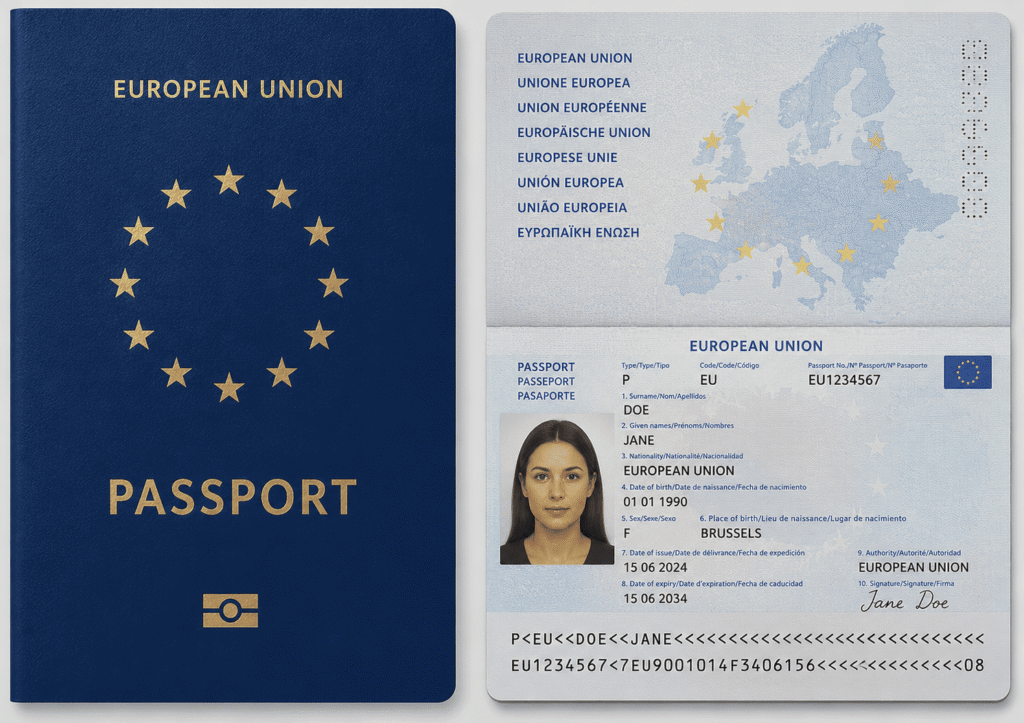
Some countries offer simplified programs for investors, refugees, or individuals with family ties, while others apply strict multi-stage procedures including exams in language, history, and the constitution. It is also important that some countries allow dual citizenship, while others require renunciation of previous citizenship.
The table below summarizes all European countries with their main naturalization requirements to compare where citizenship is easier or more difficult to obtain.
🇪🇺 European Citizenship (Naturalization)
| Country | Residence Years | Language | Main Requirements |
|---|---|---|---|
| 🇦🇱 Albania | 5 years | Albanian | stable income, no criminal record, integration |
| 🇦🇩 Andorra | 20+ years | Catalan | renunciation of other citizenship, very strict process |
| 🇦🇹 Austria | 10 years | German | stable income, integration, usually renunciation of previous citizenship |
| 🇧🇪 Belgium | 5 years | Dutch/French/German | social integration, economic activity |
| 🇧🇦 Bosnia and Herzegovina | 8–10 years | Bosnian/Serbian/Croatian | long process, loyalty checks |
| 🇧🇬 Bulgaria | 5 years | Bulgarian | income, housing, sometimes investment programs |
| 🇭🇷 Croatia | 8 years | Croatian | cultural knowledge, security checks |
| 🇨🇾 Cyprus | 7 years | Greek/Turkish | integration, investment or standard route |
| 🇨🇿 Czech Republic | 5–10 years | Czech | language exam, history, financial stability |
| 🇩🇰 Denmark | 9 years | Danish | very difficult citizenship test, financial independence |
| 🇪🇪 Estonia | 8 years | Estonian | A2–B1 language, constitution exam |
| 🇫🇮 Finland | 5 years | Finnish/Swedish | language + stable income + integration |
| 🇫🇷 France | 5 years | French | assimilation, B2 language level |
| 🇩🇪 Germany | 5–8 years | German | integration test, income |
| 🇬🇷 Greece | 7 years | Greek | integration exam |
| 🇭🇺 Hungary | 8 years | Hungarian | simplified for ethnic Hungarians |
| 🇮🇪 Ireland | 5 years | English | residence and good conduct |
| 🇮🇹 Italy | 10 years | Italian | long process, income proof |
| 🇱🇻 Latvia | 10 years | Latvian | language test + history + oath |
| 🇱🇹 Lithuania | 10 years | Lithuanian | integration + language |
| 🇱🇺 Luxembourg | 5–7 years | Luxembourgish/French/German | language + integration course |
| 🇲🇹 Malta | 1–3 years | English/Maltese | investment or special route |
| 🇳🇱 Netherlands | 5 years | Dutch | integration exam |
| 🇵🇱 Poland | 3–10 years | Polish | stable income |
| 🇵🇹 Portugal | 5 years | Portuguese | one of the easiest pathways |
| 🇷🇴 Romania | 8 years | Romanian | language + history |
| 🇸🇰 Slovakia | 8 years | Slovak | financial stability |
| 🇸🇮 Slovenia | 10 years | Slovenian | integration |
| 🇪🇸 Spain | 10 years | Spanish | integration exam |
| 🇸🇪 Sweden | 5 years | Swedish | sometimes no language test |
Main Ways to Obtain Citizenship in the EU
1. Naturalization (Residence)
The most common path:
- 3–10 years of legal residence
- stable income
- language knowledge
- integration into society
2. By Birth
Some countries grant citizenship based on parents’ status.
3. By Marriage
Simplified procedure after 1–3 years of marriage.
4. By Descent
If parents or grandparents were citizens.
5. Investment
Some countries (e.g. Malta) offer investment or fast-track routes.
Citizenship in EU Countries (Detailed)
🇦🇹 Austria
- 10 years residence
- strict financial requirements
- usually renunciation of previous citizenship
🇧🇪 Belgium
- 5 years
- language knowledge
- integration through work or education
🇧🇬 Bulgaria
- 5 years
- Bulgarian language
- possible origin-based simplifications
🇭🇷 Croatia
- 8 years
- Croatian language
- simplifications for ethnic Croats
🇨🇿 Czech Republic
- 5–10 years
- language exam
- integration test
🇩🇰 Denmark
- 9 years
- very difficult exam
- financial independence
🇪🇪 Estonia
- 8 years
- mandatory language
- constitution exam
🇫🇮 Finland
- 5 years
- Finnish or Swedish
- dual citizenship allowed
🇫🇷 France
- 5 years (sometimes 2)
- B1+ French
- integration interview
🇩🇪 Germany
- 5–8 years
- B1 German
- citizenship test
🇬🇷 Greece
- 7 years
- integration exam
🇮🇪 Ireland
- 5 years
- relatively simple system
🇮🇹 Italy
- 10 years
- B1 Italian
- very popular
🇱🇻 Latvia
- 10 years
- mandatory language
- constitutional knowledge
🇱🇹 Lithuania
- 10 years
- language required
- often renunciation of other citizenship
🇱🇺 Luxembourg
- 5–7 years
- language
- integration course
🇲🇹 Malta
- 1–3 years
- investment or special contribution
🇳🇱 Netherlands
- 5 years
- integration exam
- usually renunciation of previous citizenship
🇵🇱 Poland
- 3–10 years
- B1 Polish
- Polish Card simplifies process
🇵🇹 Portugal
- 5 years
- A2 Portuguese
- very popular
🇪🇸 Spain
- 10 years
- integration exam
- 2 years for some Latin American countries
🇸🇪 Sweden
- 5 years
- simple system
- sometimes no language requirement
Conclusions
Easiest countries:
- Portugal
- Sweden
- Ireland
- France
- Germany (after reforms)
Most difficult countries:
- Austria
- Denmark
- Latvia
- Estonia
Citizenship by Investment in Europe (2026)
What is it?
Citizenship by investment means obtaining a passport through financial contributions such as real estate, business investment, funds, or job creation.
Important: Most EU countries have abolished “fast-track passport” programs.
🇲🇹 Malta
- €600,000 – €1,000,000
- 1–3 years
- strict due diligence
🇹🇷 Turkey (outside EU)
- $400,000 real estate
- citizenship in 3–6 months
🇲🇪 Montenegro
- program closed
🇦🇱 Albania
- no direct program
- investment speeds up residence
🇷🇸 Serbia
- no direct program
- investment speeds up residence
🇨🇾 Cyprus
- former program closed
- only long-term residence
EU countries without citizenship by investment
- Germany
- France
- Italy
- Spain
- Portugal
- Netherlands
- Sweden
- Poland
Popular “Golden Visa” programs
- Portugal
- Greece
- Spain (under reform)