What is T1 – Transit Declaration
The T1 transit declaration is a customs and financial guarantee that is used for various types of goods moving through the territory of the European Union countries in transit and to ensure the delivery of products from the EU borders to the territory of the customs warehouse.
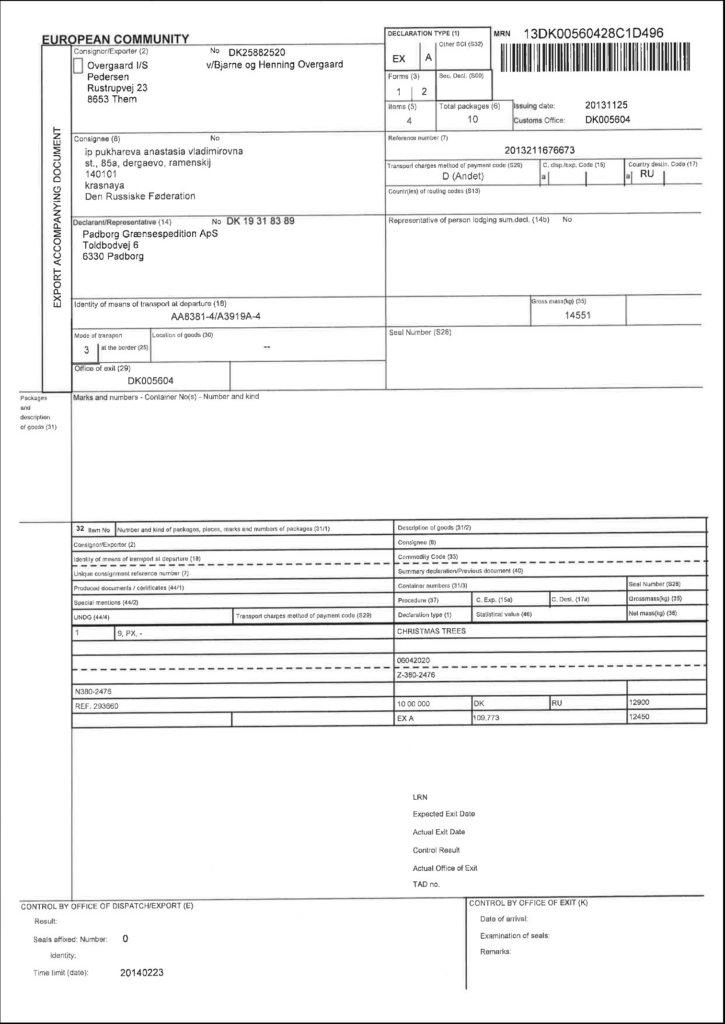
In practice, a transit declaration is a document that is handed over by the customs agent to the EU customs representatives. The document provides a guarantee of payment of the necessary fees and duties to the budget. An example is a situation in which goods transported through the territory of the EU countries on the basis of the T1 procedure are not provided from the customs post to the border, the agent who issued the document officially guarantees the payment of funds in favor of customs duties as in cases where the goods had already been cleared for further use in the European Union. In practical use, T1 is used as an alternative mechanism for providing guarantees for Carnet TIR (TIR).
In what situations is T1 used?
The document is actively used to accompany all goods, the delivery of which involves movement through the territory of the European Union.
- Products arrive by sea to EU city ports from non-EU countries, but are then transported by road to a customs post for further clearance or to a special customs warehouse for reloading.
- When products arrive at seaports of EU countries from non-EU countries and are subsequently transported outside the EU, a transit customs declaration is issued before passing through border control.
- The products are exported from the customs warehouse to another customs warehouse between EU countries.
- Products are imported from non-EU countries by land into the European Union to a customs post for comprehensive clearance to a customs warehouse for transhipment or storage.
- Imports are made from other countries outside the European Union by land to a sea port, as well as those countries that are not part of the EU.
The T1 is compiled on the basis of a previously prepared invoice, a power of attorney provided by the sender, and a packing list. An example is export deliveries from Russia, when a Russian exporter delivers products to Germany. In this case, the agent in the territory of the first border country of the EU issues a special T1, which must accompany the cargo to the final destination in Germany.
What information is included in the document?
Each transit declaration contains mandatory information:
- the country in which the product was manufactured;
- final destination of goods delivery;
- Buyer side data;
- data about the seller of goods;
- information about the carrier;
- the main parameters of the vehicle used for transportation;
- total quantity of goods with indication of mass, parameters and weight;
- actual customs price of the product;
- documents that confirm the validity and legality of the completed transaction, as well as its compliance with the stated regulations.
If insufficient or incomplete information is provided, customs officials have the right to request a number of additional papers with the necessary information. Customs officials may also issue a refusal to process the goods.
How are T1 documents filled out?
The standard form of transit declaration T1 assumes the indication of each of the available goods that were manufactured in countries that are not related to the EU. In practice, a special form of the document is used. In most cases, the legal force of T1 depends on its correct composition. If errors or inaccuracies are detected when filling out the declaration, you may receive a refusal to officially register the delivery process, as well as criminal or administrative liability.
Before officially submitting the paper, it is necessary to check the accuracy and correctness of the filling or contact a specialist. In order to significantly simplify the current filling procedure, a classic transit declaration form is provided, which helps to correctly enter the necessary data.
Features and rules for filling out T1
There are a number of basic rules for filling out a transit declaration, the implementation of which will guarantee successful passage of border control.
- It is important to take into account the full legal compliance with the documents submitted with the products. The data in the transit declaration is entered in full compliance with the provided invoice. The information is entered exclusively in Russian, and special attention should be paid to the translation of the declared information. Incorrect technical translation can become a serious problem for each of the participants in foreign economic activity.
- Any incorrect information may be assessed by customs officials as an attempt to smuggle goods across the border. The document is submitted in a ready-made printed form. It is strictly forbidden for customs officials to touch the main points for entering data.
- Names in foreign languages, as well as abbreviations, must be filled in in their original form using Latin. The document must be transferred in two copies. The first is transferred to customs representatives, and the second to the direct participant in the foreign economic activity process.
- When using additional sheets, it is necessary to adhere to the appropriate design within the established rules. It is necessary to number and certify the papers in advance.
Who is responsible for paperwork?
The official representative of the supplier must execute the necessary paperwork. To implement the procedure, it is necessary to have a number of powers, which include a power of attorney, a specialized license, and a number of other documents. It is possible to submit official documents using an electronic form. For this, a procedure for issuing a special personal book is carried out.
The book must include the necessary documents that were previously issued during the transportation process. Each region has its own rules for using special electronic forms for documents. Detailed information on this issue can be obtained from customs service representatives. In 2011, an official bill was issued that provides for the possibility of further transfer of digital copies of papers in electronic format for those cases where it was previously submitted and officially issued in paper form.
How is the registration of a transit declaration carried out?
After completing the transit declaration in Russia, the document registration procedure is carried out. The completed package of documents is handed over to customs representatives to begin registration. It is mandatory to provide documents such as confirmation of the fact of the purchase and sale transaction, a bank receipt indicating information on customs duties, as well as transport and commercial papers.
Registration is carried out by an authorized employee of the customs authority. After the necessary papers are submitted for registration, the process takes up to two hours. The customs representative must assign a personal number to each paper.
Refusal of registration
There are situations when the customs authority issues an official refusal to register documents. The main reasons for such a decision are:
- Submitting a document to an official body that does not have the appropriate authority to carry out such a procedure;
- The papers were provided by a person who does not have legal authority;
- Information in the document that is insufficient to register the delivery;
- Lack of signature by the responsible person;
- Typos, inaccuracies and errors in paper;
- Non-compliance with the form established by law.